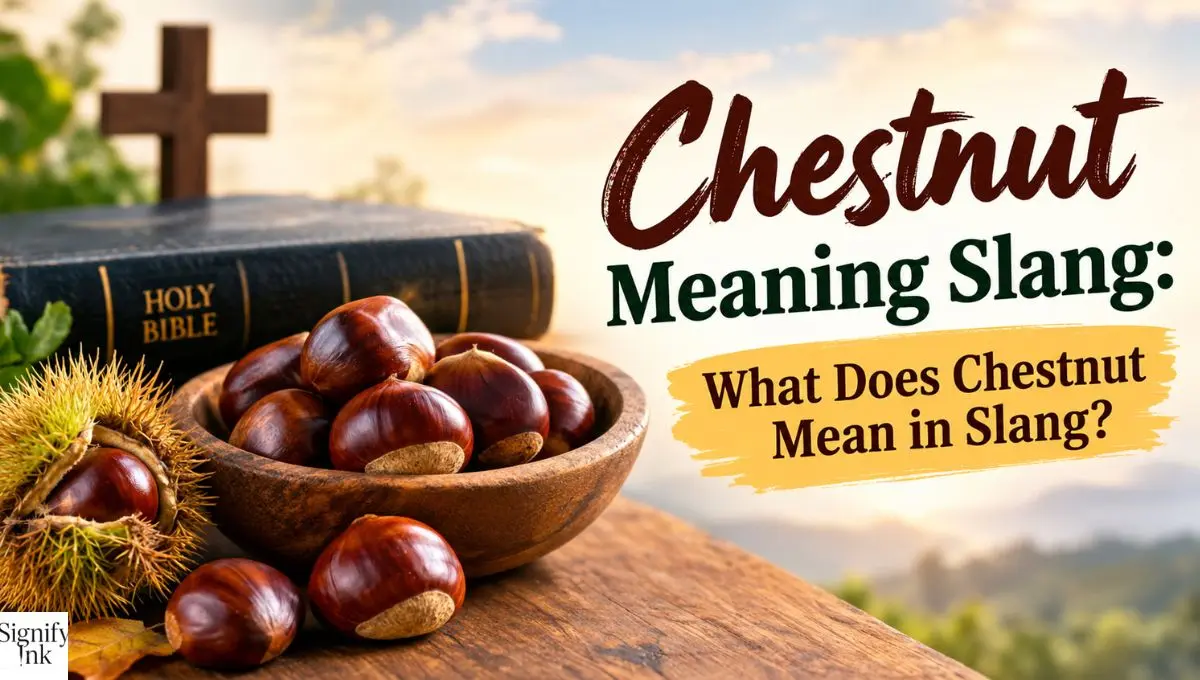
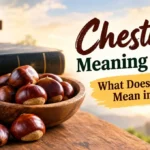
The word chestnut usually refers to a type of tree, nut, or reddish-brown color. However, in slang and informal English, chestnut has a different meaning.
In slang, chestnut means an old joke, repeated story, or familiar saying that people have heard many times before. It is commonly used in the phrase “old chestnut.”
The slang meaning is mostly found in British English and older informal expressions, although it can still appear in writing, conversations, and online discussions.
What Does Chestnut Mean in Slang?
In slang, chestnut means something old, repeated, or overused, especially a joke, story, idea, or phrase that has been mentioned many times.
When someone says “That’s an old chestnut,” they usually mean:
- “I have heard this before.”
- “This is a very common or repeated idea.”
- “This joke is not new anymore.”
| Word/Phrase | Slang Meaning |
| Chestnut | An old joke or repeated story |
| Old chestnut | A tired, familiar saying or idea |
| Same old chestnut | Something repeated many times |
Chestnut Slang Meaning Explained Simply
The simplest meaning of chestnut slang is:
A chestnut is something that has been repeated so often that it feels old or familiar.
For example:
“My uncle always tells the same story about his school days. It’s an old chestnut.”
Here, “old chestnut” does not mean a nut. It means a story that has been told many times.
Why Does Chestnut Have Different Meanings?
Words often develop new meanings because people use them creatively in conversations.
The word chestnut changed from its original meaning (the tree and nut) into a figurative expression for repeated stories and jokes.
Language changes through:
- Literature
- Theatre
- Popular conversations
- Media
- Internet culture
The slang meaning became popular in the late 19th century, especially through the expression “old chestnut.”
Is Chestnut a Common Slang Word Today?
Chestnut is not a common everyday slang word among younger internet users today.
Most people recognize it through the phrase “old chestnut” rather than using “chestnut” alone.
It is more common in:
- British English
- Books and articles
- Formal discussions
- Humorous writing
Modern social media users usually use words like:
- “old joke”
- “same story”
- “recycled joke”
- “heard this before”
instead of simply saying “chestnut.”
Don’t Miss: ABG Meaning Slang: What Does ABG Mean in Slang?
Different Meanings of Chestnut in Slang and Informal Language
The slang meaning of chestnut mainly connects with repetition and familiarity, but its exact meaning depends on context.
| Usage | Meaning |
| Old chestnut | A repeated joke or story |
| A chestnut of an argument | An old, frequently discussed topic |
| Same old chestnut | The same repeated idea |
Chestnut Meaning as “An Old or Repeated Joke”
The most recognized slang meaning of chestnut is an old joke.
A joke becomes a “chestnut” when:
- People have heard it many times.
- It no longer feels original.
- Someone keeps repeating it.
Example:
“He told that joke again. It’s becoming a real chestnut.”
This means the joke is familiar because it has been repeated many times.
The Meaning of “Old Chestnut” Phrase
The phrase “old chestnut” means a stale joke, story, or idea that has been repeated too often.
It can describe:
- A boring argument
- A common opinion
- A predictable story
- A repeated complaint
Examples:
“The debate about that issue is the same old chestnut.”
Meaning:
The discussion is old and has happened many times before.
Chestnut Meaning in Internet Slang Communities
On modern internet platforms, chestnut is rarely used as active slang compared with newer online expressions.
However, people may use it when discussing:
- Old memes
- Repeated online jokes
- Frequently shared opinions
- Common internet arguments
Example:
“That meme is an old chestnut now.”
Meaning:
The meme was popular before but has been reused many times.
What Does “Old Chestnut” Mean?
“Old chestnut” means a familiar joke, story, or idea that has become boring because people have heard it repeatedly.
It can be negative or playful depending on the situation.
For example:
- Negative: “That excuse is an old chestnut.”
- Playful: “Here comes Grandpa with his old chestnut again.”
Origin of the Phrase “Old Chestnut”
The origin of “old chestnut” is usually linked to the 1816 play The Broken Sword by William Dimond.
In the play, one character repeatedly tells a story involving a tree. Another character interrupts and says that the story has been told many times before. This scene is believed to have influenced the later slang meaning of chestnut.
The expression became widely used in the 1880s to describe repeated jokes and stories.
Examples of Using Old Chestnut in Conversations
| Sentence | Meaning |
| “That’s an old chestnut about working harder to succeed.” | A commonly repeated idea |
| “He keeps telling the same old chestnut.” | A repeated story |
| “The old chestnut about Mondays being difficult is still popular.” | A familiar saying |
Old Chestnut Meaning in British English
In British English, old chestnut is a common idiom for something that has been discussed many times.
It is often used humorously rather than as serious criticism.
Example:
“Not that old chestnut again!”
Meaning:
“Not this same repeated topic again.”
Don’t Miss: Pog Meaning Slang: What Does Pog Mean in Slang?
Chestnut Meaning on Social Media and Online Platforms
Although chestnut is not a trending internet slang word, its meaning can still appear in online conversations through the phrase “old chestnut.”
People may use it when talking about content that has been repeated many times, such as old jokes, viral posts, common opinions, or recycled discussions.
How People Use Chestnut in Online Conversations
On social media, chestnut usually describes something familiar that keeps coming back.
Common online examples include:
- An old meme shared again
- A repeated Twitter/X discussion
- A common complaint in online communities
- A joke that has been used too many times
Example:
“This debate is an old chestnut on social media.”
Meaning:
This discussion has happened many times before.
Chestnut Meaning in Memes and Internet Culture
Internet culture changes quickly, and many memes become popular and then overused.
When a meme is shared repeatedly for years, someone might call it an “old chestnut.”
| Internet Example | Chestnut Meaning |
| An old viral meme | A repeated online joke |
| A common comment | A familiar phrase |
| A repeated argument | An old discussion |
The word is not usually used by younger users as everyday slang. They often prefer modern terms such as:
- “repost”
- “old meme”
- “overused joke”
- “stale content”
Why Slang Meanings Change Over Time
Slang changes because language follows culture, technology, and social habits.
A word that was popular in one generation may become less common later.
For example:
- “Chestnut” became slang through literature and conversation.
- “Old chestnut” became a recognized phrase.
- Modern internet users created new expressions for repeated content.
This shows how words can gain new meanings and later become less popular.
Is Chestnut a Positive or Negative Slang Term?
The meaning of chestnut depends on the context and the speaker’s tone.
It can be:
- Negative when something feels boring or outdated.
- Neutral when describing something familiar.
- Playful when referring to a funny old story.
| Situation | Meaning |
| “That excuse is an old chestnut.” | Negative; repeated excuse |
| “Grandpa’s old chestnut always makes us laugh.” | Positive/playful |
| “This is a classic old chestnut.” | Familiar idea |
When Chestnut Can Have a Negative Meaning
Sometimes chestnut suggests that something is outdated or overused.
Examples:
“The argument that technology is ruining everything is an old chestnut.”
Here, the speaker suggests that the argument is not new.
Negative meanings usually appear when talking about:
- Repeated complaints
- Tired opinions
- Predictable excuses
- Overused jokes
When Chestnut Refers to Something Familiar or Funny
Not every use of chestnut is negative.
A person may use it affectionately for a story that people enjoy hearing again.
Example:
“Dad’s camping story is an old chestnut, but everyone loves it.”
Here, the phrase means:
- A familiar story
- A traditional favorite
- Something people remember
Understanding Chestnut Based on Context
Like many slang expressions, context decides the meaning.
Consider these examples:
| Sentence | Meaning |
| “That joke is an old chestnut.” | The joke is repeated |
| “She shared an old chestnut from her childhood.” | A familiar old story |
| “Here comes another chestnut.” | Another repeated topic |
The same phrase can sound humorous, friendly, or critical depending on how it is used.
Chestnut Meaning Compared With Similar Slang Words
The slang meaning of chestnut is similar to several expressions related to repetition and familiarity.
However, each word has a slightly different feeling.
Chestnut vs Old Joke Meaning
Both chestnut and old joke describe something repeated many times.
The difference is that chestnut sounds more traditional and literary, while “old joke” is a simple everyday phrase.
| Term | Meaning |
| Chestnut | A familiar repeated joke or story |
| Old joke | A joke people have heard before |
Example:
“That’s an old joke.”
More direct.
“That’s an old chestnut.”
More idiomatic and often humorous.
Don’t Miss: Bogart Slang Meaning: What Does Bogart Mean in Slang?
Chestnut vs Classic Story or Repeated Saying
A classic story may be repeated because people enjoy it, while a chestnut often suggests it has become too familiar.
| Expression | Meaning |
| Classic story | A respected or memorable story |
| Chestnut | A repeated or overused story |
Example:
A famous historical story can be a classic.
A joke told at every family gathering can become a chestnut.
Chestnut vs Other Internet Slang Terms
Modern internet language has many words for repeated content.
| Modern Term | Meaning |
| Repost | Content shared again |
| Old meme | A meme from the past |
| Recycled content | Something reused |
| Chestnut | An old repeated joke or saying |
Unlike modern internet slang, chestnut has a much older history connected with traditional English expressions.
Examples of Chestnut Used in Sentences
Understanding examples makes the slang meaning easier to recognize.
Casual Conversation Examples
- “That story about your first job is an old chestnut.”
Meaning: The story has been told many times. - “Here we go with the same old chestnut again.”
Meaning: The same topic is being repeated. - “His jokes are becoming old chestnuts.”
Meaning: His jokes are no longer new.
Social Media Usage Examples
- “This argument is an old chestnut on Reddit.”
Meaning: The discussion appears repeatedly. - “That meme is a real chestnut now.”
Meaning: The meme has become old and familiar. - “People keep bringing up this old chestnut every year.”
Meaning: The same issue returns regularly.
Formal and Informal Context Examples
| Context | Example |
| Informal conversation | “Not that old chestnut again!” |
| Online discussion | “This is another old chestnut debate.” |
| Writing/article | “The topic remains an old chestnut among researchers.” |
The phrase can appear in both casual and written English, especially in British-style writing.
Common Misunderstandings About Chestnut Slang Meaning
The word chestnut can confuse people because its original meaning and slang meaning are completely different.
Some people search for “chestnut meaning slang” because they encounter the phrase “old chestnut” online, in books, or in conversations and want to understand why a nut is being mentioned.
Why People Search for Chestnut Hidden Meanings
Many users look up chestnut slang meaning because:
- They see the phrase “old chestnut” in a movie or book.
- Someone uses it in an online conversation.
- They hear a British speaker say it.
- They confuse the slang meaning with the literal nut.
The phrase sounds unusual because the connection between a chestnut tree and a repeated joke is not obvious today.
Difference Between Dictionary Meaning and Slang Meaning
The word chestnut has both a literal meaning and a figurative meaning.
| Meaning Type | Explanation | Example |
| Literal meaning | A brown edible nut from a chestnut tree | “We roasted chestnuts in winter.” |
| Slang/idiom meaning | An old repeated joke, story, or saying | “That old chestnut again?” |
The dictionary meaning refers to the actual fruit, while the slang meaning refers to an idea or story that has been repeated many times.
How Context Determines Slang Interpretation
Context is important because chestnut does not always mean the same thing.
For example:
“I bought some chestnuts.”
- Meaning: The actual nuts.
“That’s an old chestnut.”
- Meaning: An old repeated story or joke.
The words around “chestnut” help the reader understand whether it is literal or figurative.
History and Evolution of the Word Chestnut
The history of chestnut slang shows how ordinary words can develop new meanings through culture and communication.
The expression “old chestnut” became popular because people used it to describe stories and jokes that were repeated again and again.
Original Meaning of Chestnut
The original meaning of chestnut comes from the chestnut tree and its edible nut.
The word has roots in Old French and Latin terms related to chestnut trees.
Historically, chestnuts were:
- A common food source.
- Used in cooking.
- Associated with seasonal traditions.
The original meaning has nothing to do with jokes or repeated stories.
How Chestnut Became an Expression
The figurative meaning developed through the phrase “old chestnut.”
The phrase became associated with repeated stories because of a scene in the 19th-century play The Broken Sword (1816) by William Dimond.
In the play, a character repeatedly tells the same story, and another character complains that they have heard it before.
This idea later became connected with the expression “old chestnut.”
Over time, people started using it for:
- Old jokes
- Repeated arguments
- Familiar stories
- Common sayings
Modern Internet Influence on Chestnut Meaning
The internet has changed how people use language.
Although chestnut is not a major modern slang term, online communities have helped keep the expression alive.
Today, people may use it when discussing:
- Repeated online debates
- Old viral trends
- Frequently shared memes
- Common internet arguments
Modern alternatives are more common, such as:
- “That again?”
- “Old news”
- “Recycled joke”
- “Same story”
However, “old chestnut” remains a recognized English idiom.
Frequently Asked Questions
What Does Chestnut Mean in Slang on Urban Dictionary?
Chestnut is generally used to describe an old joke, repeated story, or familiar saying. User-generated slang sites may include additional meanings, but “old chestnut” is the traditional expression.
What Does “Old Chestnut” Mean in Slang?
“Old chestnut” means something repeated many times, such as an old joke, story, excuse, or argument.
What Is the Origin of Chestnut as Slang?
The slang meaning comes from the phrase “old chestnut,” which became popular in the 19th century and is linked to William Dimond’s 1816 play The Broken Sword.
What Does “That Old Chestnut” Mean in Urban Dictionary?
“That old chestnut” usually means a familiar idea, repeated joke, or topic that people have heard many times before.
What Is a Synonym for “That Old Chestnut”?
Common synonyms include “old joke,” “same old story,” “tired saying,” “recycled idea,” and “old cliché.”
What Does Horse Chestnut Mean?
Horse chestnut is a type of tree that produces inedible nuts. It is different from edible sweet chestnuts used as food.
What Does “That Old Chestnut” Mean in Memes?
In memes, “that old chestnut” refers to a joke, format, or idea that has been reused so often that it feels familiar.
What Does Chestnut Mean in Literature?
In literature, chestnut can refer to the actual tree or nut, but “old chestnut” usually means a repeated story, idea, or familiar theme.

Welcome to SignifyInk! I’m M Abdullah.Name Meaning Researcher | 6+ Years of Name Meaning | Founder of SignifyInk.comI share accurate name meanings, origins, and fascinating insights to help you understand the stories, symbolism, and history behind every name.



1 thought on “Chestnut Meaning Slang: What Does Chestnut Mean in Slang?”