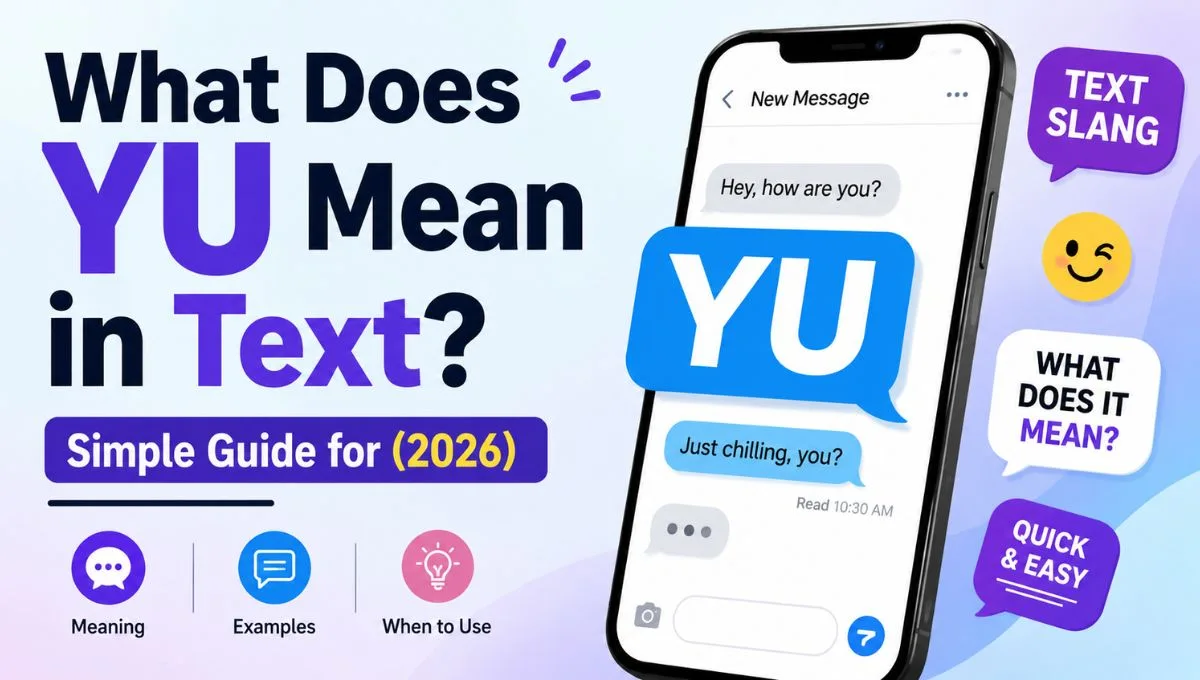
You’re scrolling through messages on Snapchat or WhatsApp when someone suddenly texts “yu?” At first, it may look like a typo or a random shortcut. If you’re wondering what YU Mean in Text, you’re not alone. Internet slang changes quickly, and short forms like “yu” are common in casual conversations, especially among younger users and fast texters.
Quick Answer:
YU Mean in Text can refer to “you” or, depending on context, “why you?” It is an informal abbreviation mainly used in quick online chats. The exact meaning depends on the sentence, tone, and conversation. Understanding the surrounding message can help you interpret “yu” correctly and avoid confusion when texting friends or replying on social media.
What Does YU Meaning in Text?
YU is a casual abbreviation with two common meanings:
- “You” the most frequent use, simply replacing the full word
- “Why You” used when someone is questioning or reacting to something
Most people type YU instead of “you” purely to save a few keystrokes. The real meaning always depends on the sentence around it.
Example (meaning “you”): A: what are yu doing B: just relaxing
Example (meaning “why you”): A: i’m heading out early B: yu leaving already?
So when you see this word, read the full sentence first context decides everything.
Where Is YU Commonly Used?
This slang thrives in fast-paced, informal digital spaces where grammar takes a back seat to speed.
Popular Platforms:
- Text messages (SMS)
- WhatsApp and Messenger
- Snapchat chats and captions
- TikTok comments and DMs
- Discord and in-game chats
Tone & Style:
- Casual and friendly
- Quick, low-effort typing
- Sometimes reactive or emotional
- Not suited for formal writing
- Common among younger, mobile-first texters
Examples of YU in Conversation
Seeing it in real chat threads makes the meaning click faster than any definition.
- Basic use: “what are yu doing” nothing much
- Friendly tone: “i miss yu” miss yu too 😄
- Checking in: “yu there?” yeah, just busy
- Surprise reaction: “i got selected” yu serious??
- “Why you” meaning: “i’m leaving early” yu leaving already?
- Concern: “i feel tired” yu okay?
- Gaming chat: “yu coming online?” yeah, in 5 mins
Notice how the tone shifts the meaning even though the spelling never changes.
When to Use and When Not to Use YU
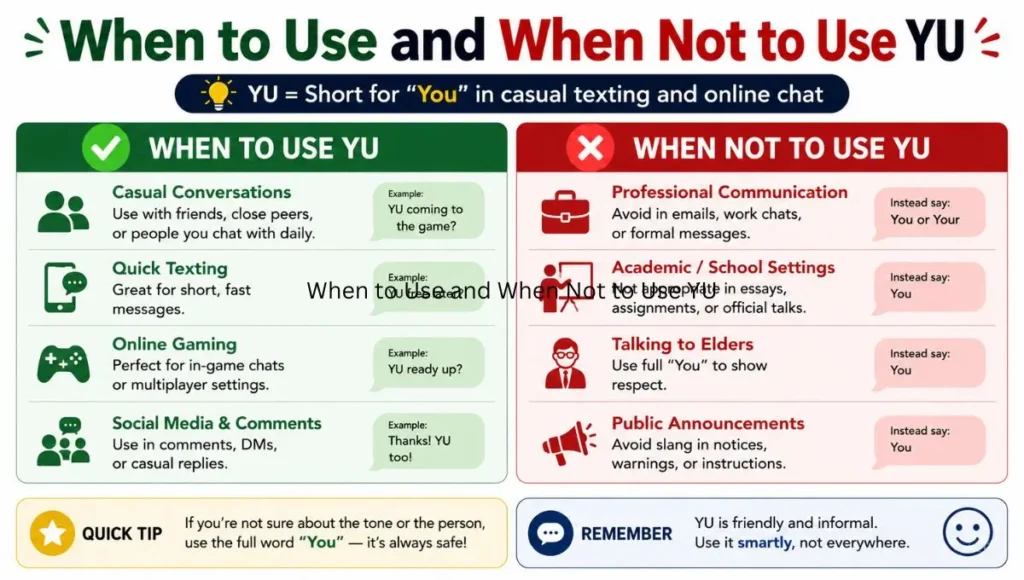
Knowing the right setting for this abbreviation helps you avoid sounding unprofessional.
When to Use YU
- Texting close friends
- Fast, informal conversations
- Social media comments and replies
- Gaming or Discord chats
- Playful or emotional reactions
When Not to Use YU
- Formal emails
- School or academic writing
- Business or workplace messages
- Professional communication
- Serious, respectful conversations
Instead of the shortcut, formal settings call for the full word “you” or a proper phrase like “could you please.”
Read Also: PTSO Meaning Slang | What It Really Means in Texts & Social Media
Other Meanings of YU in Text
The core meaning rarely changes, but tone and situation add flavor to it.
| Context | Example Phrase | Why It Works |
| Friend Chat | “yu funny 😂” | Light, casual tone |
| Question | “yu okay?” | Checking on someone |
| Surprise | “yu serious?” | Emotional reaction |
| Gaming | “yu joining?” | Asking participation |
| Flirty Chat | “miss yu 😉” | Friendly or romantic tone |
Similar Slang Words or Alternatives
Several other texting shortcuts serve the same purpose of saving time.
| Slang | Meaning | When to Use |
| U | You | Most widely recognized shortcut |
| UR | Your / You are | Everyday casual texting |
| WYD | What you doing | Asking about activity |
| WYB | Where you been | Checking on someone |
| HMU | Hit me up | Inviting contact |
| YH | Yeah | Informal agreement |
Among these, “U” is the closest and most commonly used alternative in everyday texting slang.
Why Do People Use YU in Texting?
There’s a simple, practical logic behind this trend.
Faster Typing
Typing “yu” takes less effort than the full word “you,” which matters when replying on the go.
Casual Communication
It naturally fits the relaxed, unpolished style of everyday chats and DMs.
Internet Culture
Short forms and abbreviations are now a core part of modern digital communication.
Gaming & Social Media
In gaming chats and comment sections, speed often matters more than spelling.
YU Meaning on Different Social Media Platforms
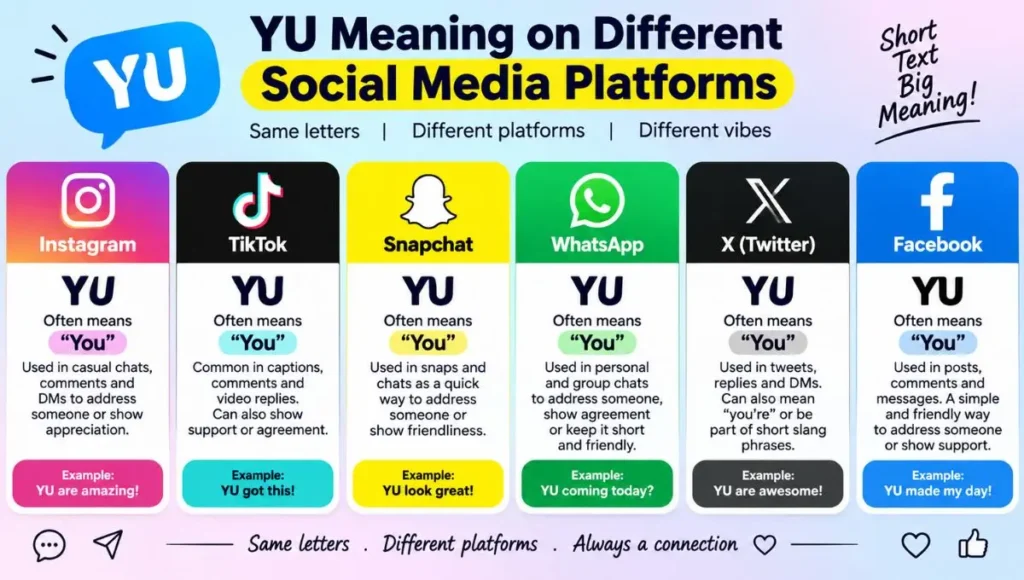
The abbreviation shifts slightly in tone depending on where it appears:
- Snapchat: Often quick, playful, or flirty matching the app’s casual vibe
- TikTok: Used in comments to react fast to videos or trends
- WhatsApp: Common in everyday chats between friends and family
- Discord/Gaming: Used mid-game for speed, like asking “yu ready?”
- Instagram DMs: Frequently paired with emojis for a friendlier tone
Across every platform, the underlying meaning stays the same only the emotional context changes.
Read Also: What Does VM Mean in Text? Simple Guide with Examples (2026)
Is YU Friendly or Rude?
This slang is generally friendly, but tone can shift how it lands.
Friendly Use:
“yu coming? 😄” or “miss yu” sounds warm and normal.
Neutral Use:
“yu there?” a plain, no-emotion question.
Slightly Rude Tone:
“yu serious??” or “yu what??” can sound shocked, annoyed, or sharp depending on context.
YU vs. You: What’s the Difference?
The two words mean exactly the same thing the difference is purely about tone and setting.
- “You” is the correct, standard spelling for formal or professional writing.
- “YU” is an informal, shortened version meant only for casual digital chats.
- Using “you” shows respect and clarity in serious conversations.
- Using “yu” signals a relaxed, friendly, low-pressure tone between close contacts.
Swapping one for the other in the wrong setting can change how a message is perceived, even though the meaning stays identical.
Why Some People Get Confused by YU
Unlike widely known terms like LOL or OMG, this abbreviation isn’t universally recognized, which causes mix-ups:
- It can look like a simple typo
- Some readers assume it’s a spelling mistake
- Older users may not recognize the shorthand
- It’s far more common in younger, casual chat culture
Context always clears up the confusion, so reading the full message matters more than the single word.
Read Also: What Does ONS Mean in Text With Examples and Usage (2026)
How to Reply When Someone Says YU
A reply should match the tone of the message. If it feels playful, reply playfully; if it sounds like a real question, answer directly. Keep responses short, casual, and matched to the platform a quick “yeah, what’s up?” or a laughing emoji usually works fine in most everyday chats.
FAQ’s
What Does YU Mean in Text From a Girl?
Usually just casual and friendly, though it can turn flirty depending on the conversation’s tone.
What Does YU Mean in Text From a Guy?
Typically casual too often used to check in or react quickly during a chat.
What Does YU Mean on Snapchat?
Same core meaning, “you,” but often used playfully or flirtatiously on Snapchat.
What Does YU Mean in Texting?
It’s a fast, informal way of typing “you” in everyday text conversations.
What Does YU Mean in Urban Dictionary?
Urban Dictionary defines it as an informal spelling of “you,” used mainly online.
What Does YU Mean in Slang?
In slang, it’s simply a shortcut for “you,” popular in casual internet chats.
What Does YW Mean in Text?
YW is unrelated slang meaning “You’re Welcome,” used after someone says thanks.
What Does YUS Mean in Text?
YUS is an excited, stretched-out way of saying “yes” in casual chats.
What Does YUH Mean in Text?
YUH is another casual variation of “yeah” or “yes,” often used for emphasis.
Is YU a Slang Word in Texting?
Yes, it’s informal texting slang, not a standard or grammatically correct word.
Final Thoughts
At its core, YU mean in text is a simple, flexible shortcut that mostly stands for “you,” and occasionally “why you,” depending on how it’s used. It thrives in casual spaces texting apps, social media comments, and gaming chats where speed matters more than perfect spelling.
Still, because it’s informal slang, it’s best kept for friends and relaxed conversations rather than professional or academic writing. Once you understand the pattern, you’ll start spotting this shortcut everywhere online, and you’ll always know whether someone’s talking about “you” or asking “why you” did something.

Welcome to SignifyInk! I’m M Abdullah.Name Meaning Researcher | 6+ Years of Name Meaning | Founder of SignifyInk.comI share accurate name meanings, origins, and fascinating insights to help you understand the stories, symbolism, and history behind every name.